[00:00:00] Speaker A: Need to make sure that the latency is predictable so you know how long it takes for that command to actually be executed.
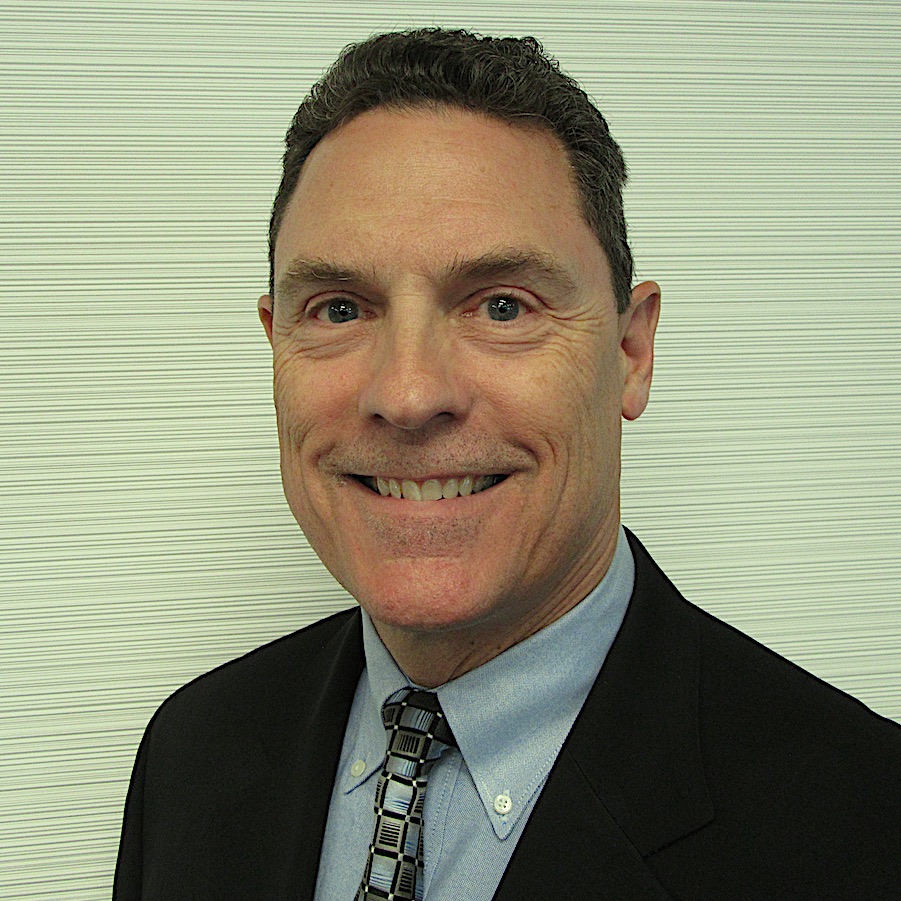
[00:00:14] Speaker B: Hello everyone and welcome to the Robot Industry Podcast. My name is Jim Beretta, I'm your host and I'm thrilled to invite Jim Hirsch who's the Global VP of Sales for General Embedded Market at at BlackBerry QNX with over 25 years in software sales experience in the federal aerospace, defense, industrial automation, medical device and telecommunications and also automotive markets. Hey Jim, welcome to the podcast.
[00:00:40] Speaker A: Thanks Jim, I appreciate it. Appreciate being here and looking forward to our discussion today.
[00:00:44] Speaker B: Jim, how did you find QNX and like what led you into this path?
[00:00:48] Speaker A: Really? QNX found me.
I had previously worked in this vertical market and this industry and had moved away and gone to another vertical industry around modeling and simulation. QNX reached out like my background and actually brought me on board back in September of 2024. Thrilled to be here and have been thrilled since I got here.
[00:01:11] Speaker B: So I know QNX because of course I used to build with ATS Automation. We used to build these high accuracy placement systems. But I'm going to ask you for somebody, guys who's walking their dog and they don't know about qnx. Can you tell us a little bit about who QNX is?
[00:01:25] Speaker A: So QNX is obviously we're in a very niche market. It's a very small market, but very important market. You know, we provide trusted foundational software really for software defined physical AI systems depending upon that really need to operate safely, predictably and be secure in the real world. We've been around for about half a century, safety critical applications where failure is not an option.
That could be in space, that could be on the factory floor, it could be just about anywhere automobiles. The business leads the way in delivering safe and secure operating systems, hypervisors solutions, development tools along with support and services delivered by trusted embedded software experts. That is our customers. Right. So QNX technology underpins hundreds of millions of vehicles in the market today, on the road today in a wide and as well as a wide range of mission critical systems across industrial controls, robotics, medical devices, commercial transportation, rail and defense.
[00:02:30] Speaker B: Jim, what is a real time operating system?
[00:02:32] Speaker A: That's a great question, Jim. When I first started in this industry, I'm wondering what a real time operating system was. I was used to Windows, I'd heard of Linux on the enterprise side of the business, but a real time operating system was, I think it was originally developed for when microprocessors first started coming out and microcontrollers first Started coming out way back when, in the day when you and I were engineers and starting earlier in our careers. They needed customers, needed an ability to run applications on some of these small microcontrollers and microprocessors.
If you remember back in the day when memory was very, very expensive, minimizing the amount of memory required, et cetera, you needed a time operating system, a very small operating system, very small kernel that you could run on these, on these processors. So, but what you also need is you needed it to perform in real time and be deterministic and with low latency. So when and if you're using this microprocessor to run a controller on a factory floor, a medical device or car, et cetera, you had to have something that was very small, very inexpensive, small footprint, but also ran your applications and was predictable and could provide the safety and security required for running these devices.
So real time operating systems were developed, I think we started back in 45 years, 50 years ago, in developing this product, and we have evolved it over the, over the lifecycle of our company.
[00:04:09] Speaker B: Jim, Latency means speed, correct?
[00:04:12] Speaker A: So latency doesn't mean speed. Latency is really the time that you actually making the command and the actual command being executed. Right. So that you, you have latency and you need to make sure that the latency is predictable. And you, on top of latency, you have issues with jitter. So there might be some jitter there, Right. So what we do with our product is make sure that it does happen within a very finite amount of time so that when you, you issue a command, it actually happens within a determined deterministic time frame.
[00:04:44] Speaker B: Excellent. Thank you for that.
I'm sorry if I'm sounding a little bit like Uncle Buck getting all these questions out of the way. So who are the current owners of QNX is BlackBerry, is that correct?
[00:04:55] Speaker A: It is.
You know, you might think of BlackBerry as the handset provider that, that we all used to use and love. But yes, BlackBerry's evolved since those days and they are focused on secure comms, part of the business, which can be used to secure, you know, federal government communications, defense communications, and we QNX are another division outside of SecureComms as part of the BlackBerry family.
[00:05:26] Speaker B: Jim, I'm kind of interested to know because QNX is in automobile. So what's it doing in my automobile?
[00:05:33] Speaker A: That's a really good question. Right. So QNX actually is in hundreds of millions of vehicles worldwide, supporting the foundational functions in the car, such as digital cockpits, adas, and if you don't know what ADAS is. It's Advanced Driver Assistance System. So all the controls you fight with on your steering wheel, right, are being managed by, by qnx. They could be in infotainment systems and domain controllers.
[00:06:01] Speaker B: So it's, it's kind of everywhere. So for our listeners, again, I'm going to ask this one other question about Linux for those people that might not understand Linux and we were kind of talking about this in the warm up call. What is Linux?
[00:06:12] Speaker A: Yeah, great question. Right. So Linux evolved and obviously was developed by Linux Linus Torvald back in 19, I think in 1991. But Linux is a family of open source operating systems, right? Engineers can purchase this. If you think about NFT enterprise servers that are out there today, they're buying to run the applications on those servers. They're buying enterprise Linux from a company like Red Hat, et cetera. Right. So you know, it's, that's where it got its start and then it's made its way to the cloud and it also made its way into embedded devices back in the early 2000s. Okay. But it's, it's typically delivered, as I mentioned before, as distributions from Ubuntu, Red Hat, et cetera. But it's even more prevalently used by LINU engineers building their own distributions today. So you can, you can gain access to the kernel and you can actually modify it to do what you're looking for it to do. That's why engineers design their own distributions,
[00:07:13] Speaker B: of course, because they're engineers, right?
[00:07:14] Speaker A: Yes, they are.
[00:07:16] Speaker B: I know there's lots of things you cannot talk about, but I suspect you're working with companies like Nvidia and on humanoid and on surgical robots.
[00:07:25] Speaker A: Yes, we are working with companies like Nvidia. In fact, we just did a recent press release with them. Our partnership with Nvidia brings AI driven robotics and industrial systems together onto a single platform called IGX Thor. It combines high performance AI inference with certified real time operating safety and security capabilities. You know, the approach has really been, is, I guess the approach is relevant across a wide range of emerging systems. If you think about AMRs, which are autonomous mobile robots, humanoids, industrial robots and other machines that integrate perception on device processing and determinism.
[00:08:03] Speaker B: It's such an exciting conversation because it's like in everything, it seems you probably try. I'm trying to find out what areas you don't have QNX operating in, but I'm wondering if you can give me some other use cases of where QNX is being used.
[00:08:17] Speaker A: Absolutely. So we Are, as I mentioned before, heavily utilized in auto. That's been really our tradition and have done very, very well in that, in that market. In fact, we're the market leaders, but we're also heavily used in medical devices and have been for years and years, for decades. Industrial automation in emerging markets like robotics. Right. Albeit robotics has been around for a while, but it's evolving and emerging as well as potentially in the future. You might see us a lot in humanoids, but that's. I think that market has to mature and evolve, but in just about any space you can think of, wherever there's a microprocessor being used, whether it's defense and all the other markets I mentioned before, a real time operating system comes into play and is being leveraged.
[00:09:08] Speaker B: When I think about your customers, I kind of think about their pain and their pain is, hey, they need something deterministic, they need real time. But they also like safety and security are kind of those big motivators. Are there any other motivators that are keeping your customers up at night?
[00:09:22] Speaker A: Well, so there's a variety of motivators. You touched on them. Safety and security are really very important to our customers. Right.
Most of the customers interested in safety and security have to meet specific standards and certifications. So if we think about the automotive industry, they have to meet ISO 26262. In industrial automation, they need to meet IEC61508 or in medical devices, IEC62304. All these certifications drive requirements within the system and a lot of those requirements can't be addressed with Linux. They can only be addressed with a certified real time operating system that can actually meet those needs and is certified to meet those needs. As we evolve now, one of the biggest pushes nowadays that are keeping our customers up at night is around cra. It's a cyber resiliency act being brought to the market in Europe. But it doesn't only impact Europe, it's anybody who delivers solutions into Europe. Because cyber is, cybersecurity is a big issue today.
So coming to a vendor like QNX and getting the safe, the security built in and managed, you know, and CVEs remediated as they occur within that within or being exposed and getting those remediated is a super big concern with all of our customers.
Now CRA applies to specific industries, doesn't apply to medical devices which is typically, are typically managed by the fda. Okay. And certifications, but they are just as heavily invested in remediating CVEs there as well.
Hello everyone.
[00:11:07] Speaker B: This is the producer, Jeff Bremner of the Robot Industry podcast. Unfortunately, Jim's feed cut out here, but I want to keep the rest of the interview with our guest Jim. Enjoy the rest of the show.
[00:11:20] Speaker A: Absolutely. So if you think about this, we're taking away a lot of the, the challenges and the work needed to for sustaining engineering, especially if somebody leverages a Linux kernel in their development and has to sustain it long term. So I know engineers love to develop, but what's occurred over the years is all these Linux distributions that are out there in the market today and they were developed by their engineers, but there's also sustaining engineering that goes along with that. So how do you continue to redirect some of your best engineers going back to sustain older products, when in reality is if you just bought something off the shelf that was built and had built in security and had the standard updates and support, you wouldn't have to worry about that. So you reduce your sustaining costs, your ability to sustain products that are in the field. Especially when software goes end of life, even from, even from companies like qnx, startups are very important.
And the reason they're very important is because that's where all the new technologies emerge. You think about all the AI startups are out there today, or all the startups are out there today building devices that actually are leveraging AI. They're coming up with new ideas and new capabilities and we want to make sure that they are essentially not building in or leveraging, let's say Linux, but are leveraging our software. In a lot of cases, they can't really afford to buy our software. Right. Startups, they have limited funds, so they've traditionally defaulted to Linux as a start. And as the markets mature, they tend to pivot and move over to solution providers like QNX because they have to meet all the safety and certification requirements. So we, a couple years ago we thought about how do we help engineering teams and companies mitigate the challenges with that process.
So we came up with a solution called QNX Everywhere. And QNX Everywhere has been a godsend for a lot of engineers, customers, startups, et cetera.
Absolutely. So part of the QNX Everywhere, I mentioned QNX Everywhere theme was how do we roll out QNX Everywhere and train engineers? Because if you think about all of the engineers that are participating in all these robot classes and competing in the robotic class, excuse me, challenges that are out there today, they've traditionally used Linux as their base foundational software to build out their solution. So we came up with QNX Everywhere. And we're rolling it out to universities worldwide to give these engineers access not only to Linux, but also to what a real time operating system is. They can use it at no cost. We're actually helping facilitate the training and helping universities ramp up quickly so that their output is engineers who understand what a real time operating system is, what Linux is, and how to best use those solutions in the markets that they're going to be hired into in the future. Yeah, so we're. Yeah, you're right. We, we do have a new report, it's called Inside the Robot.
It's architecture benchmark report. And it launches on May 27th in conjunction with the Robotics Summit and Expo in Boston where we're going to have a big presence, you know. QNX commissioned a global study of a thousand robotic developers, systems integrators, manufacturers across seven different countries.
And the goal was really to go beyond surface level trends and understand how developers are adapting to real world architectural challenges, building safe and secure and deterministic robotic systems under increasing regulatory innovation pressure, which I mentioned before. Right. The research revealed three things. The most significant inhibitors to progress, the gap between systems, inhibit ambitions and current capabilities, and the developers, which is really kind of the most important thing view on the industry's future.
You know, I can't give too much away yet, but I'll say that the hardware is no longer the barrier to progress thanks to companies like Nvidia and Qualcomm, et cetera.
But software is definitely the barrier today.
Absolutely. The report will be on the website, as will QNX Everywhere. You can download QNX Everywhere. I'll keep pushing that because I think it's really important, but absolutely you'll be able to download the report off of our website.
Yeah, that's a great question, Jim. It'd be great to have you expand on hiring for talent. Right. Because we're a worldwide company and obviously I'd like to know more about what's driving that question.
Absolutely.
We are hiring talent around the world. We have development facilities in, based, headquartered out of Ottawa, but that's not our only location. We have a large facility in Hyderabad, India. Right.
And we are hiring talent across the board, you know, to, for, you know, sales field, engineering, engineering, etc. Just about everywhere. Right.
I don't think so. I think we covered quite a few different topics. But if you have any other questions, I'm free. Feel free to. Yeah, I'm not a windsurfer.
I'm pretty much at the end of my, my windsurfing career. Right. So I'M more of a, of a golfer.
Unfortunately. I live in New England, so I don't get a chance to golf year round, but I just love golf and I love getting outside and, and enjoying, you know, the nature and, and wind on my face, et cetera, instead of sitting behind a desk or sitting on an airplane. Right?
Absolutely. Golf is a, is a problem solving exercise because every shot is a different challenge. Right. Each one offers a different challenge. Whether it's a bunker close by, whether it's water you have to carry on your shot, whether the grain is going to slope away from you and the ball is going to land and roll forward and off the green.
It's every single shot is a different challenge. And I think that's what really draws me to it.
Thanks, Jim. I appreciate the time.
[00:17:57] Speaker B: Thank you.
Our sponsor for this episode is Earhart Automation Systems. Earhart builds and commissions turnkey solutions for their worldwide clients. With over 80 years of precision manufacturing, they understand the complex world of robotics, automated manufacturing and project management, delivering world class custom automation on time and on budget. Contact one of their sales engineers to see what Earhart can build for you and their info@airheart automation.com and Earhart's hard to spell. It's E, H, R H A R D T. And thanks to our other sponsor, Mecademic Industrial Robotics. Mecademic builds the world's most compact and precise robots in industries such as photonics, med devices, optics and electronics. Mecademic continues to set new standards in precision, footprint and flexibility, accelerating small component automation for manufacturers, robot integrators and innovators alike. And you can find
[email protected] I'd like to acknowledge a three the association for Advancing Automation. They are the leading automation trade association for robotics, vision and imaging, motion control and motors and the industrial artificial intelligence technologies. You can Visit
[email protected] and if you'd like to get in touch with us at the Robot Industry podcast, you can find me Jim Beretta on LinkedIn. Today's podcast was produced by Customer Attraction Industrial Marketing and I'd like to thank my team, Chris Gray for the music, Jeffrey Bremner for audio production, my business partner Janet, and our sponsors, Earhart Automation and Mechademic Robotics.