Episode Transcript
[00:00:00] Speaker A: With automation, you really do need to be presenting yourself as a, as a solution provider and being able to demonstrate how not only you have these products, but you're able to put them together to solve a real world problem.
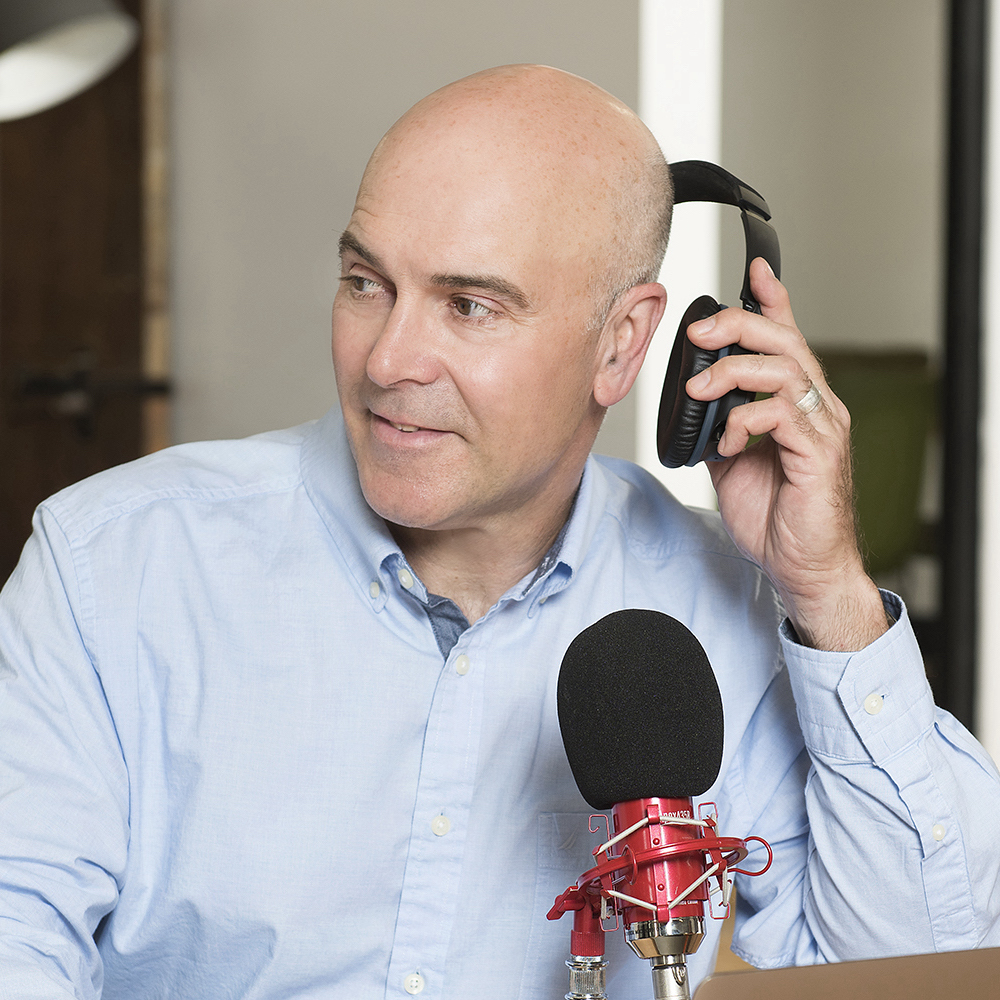
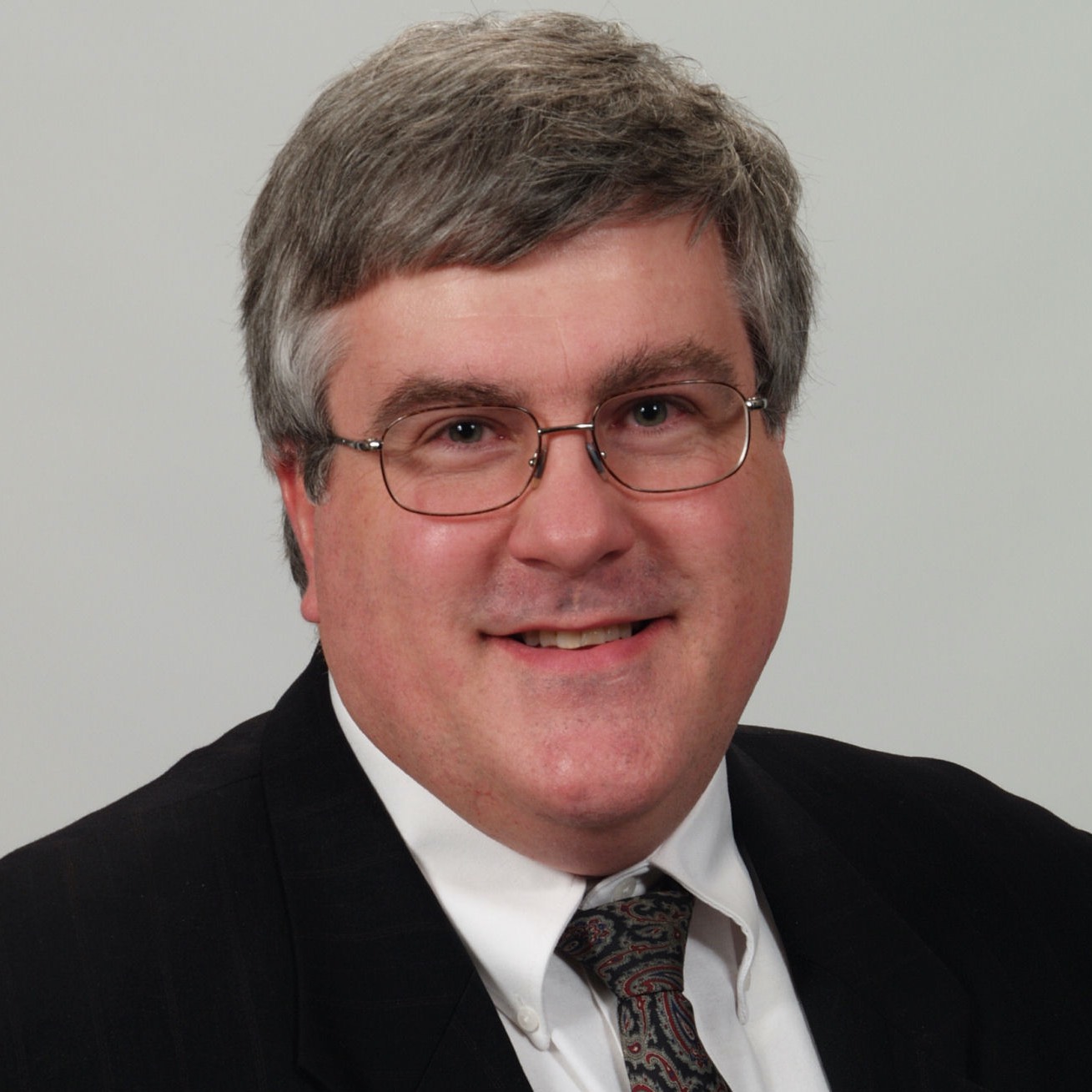
[00:00:20] Speaker B: Hello everyone and welcome to the Robot Industry podcast. My name is Jim Beretta and I am your host and it's my pleasure to introduce Garrett Renders, who's from Phoenix Contact. We're here at the show and doing some podcasting on location. So we are at the Emerging Technologies in Automation and Mobility Transformation conference and trade show and it's courtesy of Invest Windsor Essex. So I want to thank them for giving me some booth space and the opportunity to have some interviews here on site. So welcome to the podcast.
[00:00:50] Speaker A: Oh, thanks for having me.
[00:00:51] Speaker B: Jim, can you tell us a little bit about yourself, about how you got into this business?
[00:00:55] Speaker A: Absolutely. So it's been funny how Phoenix Contact has followed me through my career. After graduating from Western University electrical engineering class 2014, I started out in more of a technical project management type role for five years. And part of my responsibilities there was building DIN rail assembly. So that was my first exposure to Phoenix with terminal blocks, power supplies. After my time there, I moved into moved to a PCB assembly house, contract manufacturer and business development. And that was my exposure to the device connectors side of the Phoenix Contact business. After that, spent a few years in the machine vision and embedded computing industry, which was my exposure to some of the more the automation portfolio at Phoenix Contact. So it's been funny how over the years all of my career stops have kind of led me to this point.
[00:01:48] Speaker B: All roads lead to Phoenix Contact for you?
[00:01:51] Speaker A: Apparently, yes.
[00:01:53] Speaker B: So who is Phoenix Contact? For those people that are out there that are going, I know that name, I know that name, I just can't remember. Obviously you're making DIN rails and connectors and such. But what Tell us a little bit about Phoenix Contact.
[00:02:06] Speaker A: Yeah. So Phoenix Contact was founded in Germany 1923 and is the inventor of the terminal block in 1928.
Phoenix Contact has continued to expand its portfolio over the years to support a wide range of industrial automation and electrical components. This includes connectivity, so terminal blocks, cabling, power and reliability, so power supplies, UPS's cabinet efficiency, which is how to efficiently build cabinets or panels, and the automation division, which I'm responsible for.
[00:02:41] Speaker B: Excellent. As a business development manager, are you calling on a lot of new accounts, existing accounts, or how does that work?
[00:02:47] Speaker A: There's a mix. A lot of what my role is within the business development manager title is trying to support our Account managers, our customers and distributors, with finding new solutions across our automation portfolio and generating more brand awareness around some of the solutions that we do provide.
A lot of the time Phoenix Contact's looked at as a component or product provider and automation doesn't always work that way. With automation, you really do need to be presenting yourself as a solution provider and being able to demonstrate how not only you have these products, but you're able to put them together to solve a real world problem.
[00:03:31] Speaker B: So you have the automation division. What other division does Phoenix Contact have?
[00:03:36] Speaker A: So the automation division would be responsible for things like controllers, PLCs, IPCs, HMIs, IO networking. So that would be manage unmanaged switches, cybersecurity routers, relays, signal conditioners and functional safety. Beyond the automation division, power and reliability would be more power supplies, UPS's connectivity, so terminal blocks and cabling, things like that, solutions outside the panel as well, and then efficient cabinet cabinet building is another large focus for us at Phoenix Contact. And that's in addition to the device connector space that's more board level or connectors.
[00:04:15] Speaker B: And so what's really hot at Phoenix Contact, like I'm assuming that you, you kind of call on machine builders and automation integrators, but also end users.
[00:04:24] Speaker A: So yeah, so. And that's where the solutions provider moniker comes in.
What we're trying to help demonstrate in the automation division and is how our product lines come together to solve real world problems. And one of the biggest ones that we're identifying in a few different industries right now is OT cybersecurity.
There are a, there's a very wide range of familiarity or comfort level within the cybersecurity space. And where we are seeing that there is room to improve processes on that front is around finding ways to isolate the IT network from the OT network to prevent backdoor access one way or another, as well as reduce network traffic between the networks.
[00:05:13] Speaker B: So what's interesting about your role is that you have to be kind of a technical expert in kind of everything, right?
[00:05:19] Speaker A: Absolutely. There's a wide range of segments, wide range of products. I'm very fortunate to have very knowledgeable colleagues supporting me across the board.
[00:05:28] Speaker B: So what are your customers? So there's a big, like you say, a big push into cybersecurity. And because you're well suited for this, because you're in so many different automation companies, what who are you talking to? Is it OT and IT and CEOs and CFOs, like who are your buyers in cybersecurity, for example?
[00:05:48] Speaker A: So largely with cybersecurity, it comes down to whoever's identified a concern or a problem. You've, you've, everyone that you've listed kind of hits the nail on the head a lot of the time. When you're talking, talking OT cybersecurity, you're going to need some sort of level of buy in from the IT side of things with our cybersecurity solution for isolation using industrial demilitarized zone. Often the benefits to the IT side of the space is less responsibility that far down into the network architecture from the OT side. What we try to offer our customers is a way to, to provide a secure remote access point without having to work through necessarily IT chain of command.
[00:06:35] Speaker B: Very cool. Thank you for that. So what industries are keeping your customers busy? So I'm thinking about like end users, but also machine builders and automators.
[00:06:45] Speaker A: As everybody's seen in Canada, the automotive industry has taken a little bit of a backseat in 2025, unfortunately. Food and beverage, water, wastewater, a couple of spaces where OT cybersecurity is at the forefront right now.
[00:07:01] Speaker B: Excellent. From there on, when you mentioned about PLCs, about HMIs, about what other products are kind of in high demand from you at the moment going back to.
[00:07:13] Speaker A: Cybersecurity, the MGUARD Router is a very popular talking point right now. So that's kind of the heart of our cybersecurity solution, which we call a concentrator panel. The MGUARD Router is a cybersecurity certified router. So what that means is it's certified for IEC 624-4342 cybersecurity certifications, which has become a regulatory requirement overseas. In Europe for industry.
In Canada, the same regulations aren't yet present, but we are expecting that there's going to be, that these type of laws and regulations are going to be, are going to be making their way across the Atlantic.
[00:07:55] Speaker B: And how do you get trained on your products like at Phoenix Contact, working.
[00:08:00] Speaker A: With our wide range of local technical support and I guess field application specialists, we have a. So Phoenix Contact Canada is about 120 employees strong, 50 of which are in our headquarters in Milton.
That includes our product managers, our technical support specialists, field application specialists, customer care, and that offers a wide range of technical competency and support that's not always seen when you're bringing European products or European technologies to the Canadian market.
[00:08:40] Speaker B: You know, it's so important, I think of the customer experience. Right. So now if you do need support, you've got lots of support.
[00:08:46] Speaker A: Absolutely.
[00:08:48] Speaker B: And what other trends Are you seeing kind of long term at Phoenix Contact or with your customers?
[00:08:57] Speaker A: So with our offering, one thing that we've seen that has is generating a lot of buzz and interest is flexibility both in terms of communication, protocols and programming. So what I mean by that is oftentimes customers might have a wide range of PLCs on their plant floor and need to bring all of that data into one location. And when I say wide range, they might have a couple of different brands of PLCs. Our PLCnext technology is well suited to support something like that because it is designed to talk over all those standardized protocols, the Ethernet, IP, Profinet, Modbus, OPC, UA. So that flexibility through PLCNext, using that as an edge device for data aggregation ends up being a great tool for customers who are trying to bring all that data into a central location, either to dashboard it, send it to a cloud, or maybe run machine learning algorithms on it for predictive maintenance. PLCnext also offers a unique offering because in addition to the IEC 61131 standardized languages for controllers, it also offers the ability for open source text based high level programming. So that's the C, C, Python, those type of languages which tends to be much better for data manipulation or data processing than you would typically see in like ladder logic. So the ability to combine the efficiency of ladder logic for control and use those high level languages to process data is, is a unique, is a unique offering to the marketplace.
[00:10:35] Speaker B: So we're talking, we're talking a lot about data and about high and about speed of data. Is that something of concern to your customers and builders and such?
[00:10:43] Speaker A: Of course, it's always something that we're having to account for whenever trying to find the right solution for our customers.
[00:10:51] Speaker B: So when you're talking to your customers, you're probably also talking a lot about artificial intelligence.
[00:10:56] Speaker A: Absolutely. Artificial intelligence comes up a lot in conversations and that kind of drops back to the predictive or preventative maintenance that I was referring to.
Our PLCNext devices do offer an add on package called MLNext which is designed for machine learning, help supports things like anomaly detection so that if you are, let's say you're monitoring energy through a plant, you see some uncharacteristic spikes that might give you the indication that you are going to need to perform maintenance sooner than later and be able to schedule that on your time as, as opposed to a plant outage. In addition to that, I've referred to PLCnext as a way to send data to a cloud. That is another place where we see a lot of AI done is kind of in that cloud computing area. And that tends to be if you're pulling in a whole lot of data from a bunch of different edge devices into a central, into that centralized cloud and performing or running AI algorithms on that, again, preventative maintenance or overall equipment efficiency. So one big place that we see is, okay, somebody might be monitoring OEE across a couple different lines, and they might see that one line is running much better than the other. Now, that could be a performance issue on the equipment side, could also be a performance issue on the personnel side. So sometimes it's a case where you collect that data, you see that, that is a, you see that there's a discrepancy, and maybe it's a case of you switch the operators for a day, see how it performs, and then from there you can make better decisions around, okay, does this equipment need to be, or does it need to go through maintenance? Does it need to be upgraded? How do we solve this?
[00:12:46] Speaker B: Garrett, let's talk a little bit more about oee, because you brought it up several times in this conversation. How important is OEE to your customers? And knowing that they have lots of different machines and lots of different systems.
[00:12:58] Speaker A: Uptime is critical to pretty much everybody in the automation space. And overall equipment efficiency is a great way to make sure that you are performing at top level and not having to deal with unexpected downtime. So that could be. I referred to energy management as far as tracking, you know, maybe, maybe power spikes, things like that. But realistically, the principle applies to anything that you can, you can measure and provide quantifiable data for, whether it might be the speed of the rotation of whatever device you might be measuring rotation for, or temperatures, pressures, things like that, anything that can indicate that there is an anomaly and preventative maintenance needs to be performed to optimize your equipment efficiency. That's where it comes into play.
[00:13:52] Speaker B: Does everybody have a different OEE or an expectation of oee, or is it just get that oee, get a baseline, and then go from there?
[00:13:59] Speaker A: So, fantastic question.
With one thing that we tend to try to highlight whenever we're having a TechTalk or a lunch and learn or presentation realistically, you always need to have some sort of a metric in mind. It's very important to know what you're looking for to be able to figure out how to get that data and how to apply it.
You'll often hear somebody say, oh, well, we want all this data.
We don't know what to use it for, but we Want it. And realistically that ends up being a way, that ends up being a very costly way to try to implement overall equipment efficiency solutions because you're spending more money to put send data into a cloud and collecting all of this data that you don't really know what you're using it for yet. So if you have an understanding of what you expect to be could be a cause for concern, then that allows you to say, okay, I need, I only need data points a, D and G and we can ignore the rest. We can bring those into whatever machine learning algorithms we need. Ends up saving money on the cloud storage front and ends up being a lot more efficient from a programming standpoint as well as gives you a solid path forward.
[00:15:15] Speaker B: And so the reason I'm asking you this is kind of a leading question. A couple of years ago I had one of your guys on a webinar and they were talking a little bit about the, about the Phoenix Contact buildings in Milton where you guys decided to put monitors on everything in every room. Can you tell us a little bit about this? I know it's a bit of a surprise question, but I thought it was kind of a fun experiment.
[00:15:38] Speaker A: Absolutely. And this is one of our, I think our favorite demos in our headquarters in Milton. And the reason for that is it really takes advantage of our, the wide range of our product portfolio. So what we've done in our headquarters, just like Jim alluded to here, is we've connected CTs throughout our plant to be measuring energy. So power, voltage, current, power factor, whatnot. We're bringing that all into our M Pro energy meters.
From there, we connect those to our PLC next Edge devices for data collection, send that all into a cloud dashboard it and then, and use that as a, as a baseline to be able to demonstrate, okay, we're, we can take all of these products from all of our core business units, bring them into one space and provide a solution that is used for monitoring overall equipment efficiency.
Can be used to save money by, you can say, oh, that bank of lights should be turned off between these times. Every little bit helps.
And it's a cool demo to be able to show off just because you see things like cars get plugged into the electric chargers and then you know, you see these big spikes and how the system behaves based on that.
[00:16:56] Speaker B: Yeah, it's, to me, it was a kind of a cool way to use your own product. You know, we call it often like eating your own dog food. Right. Where you, you know, let's use our own technologies to measure Something that can actually have a real effect.
[00:17:10] Speaker A: Well, and that's where again, the solutions part of the solutions provider idea comes into play, like we do in automation. Like you can't, it's, it's not enough to just say, hey, try our PLC or try our thing instead. You really like, if you're approaching new customers, you really need to be putting something in front of them that's going to have an impact on them and their business. Digitalization is all about using data to drive business decisions. I like to think that Phoenix Contact is really striving to be a leader in that space.
[00:17:45] Speaker B: You know, it's one thing to have a gut feel about something and some people are really good at that, but it's different when you can actually look at the numbers. Numbers don't lie. It's unemotional. Right. And so I think that there were some things that you found out about your own Milton facility. Like there was like some refrigeration going on in a room that wasn't needed or something like that. So you learned some stuff, some really valuable data as well.
[00:18:07] Speaker A: Absolutely.
You can't learn, you can't figure out some of those things until you actually start bringing data in and actually.
[00:18:18] Speaker A: Start to measure it against some of those KPIs and some of those goals that we've alluded to a couple of times for this discussion.
[00:18:25] Speaker B: Garrett, this has been a fun discussion. Have we forgotten to talk about anything when it comes to Phoenix Contact, about what you're doing and some of the trends that you're seeing in the automation industry?
[00:18:34] Speaker A: I think we've covered a lot. We do have our event in Nuremberg coming up at the end of November. It's called spx.
It's one of the big automation shows. And what we like about sps, it's a very tech heavy conference where it's not just like the business development people like me. We have a lot of our RD and our engineers that are manning the booth with the idea of demonstrating all of the latest and greatest technologies that are on their way out or to the marketplace.
That tends to be a big show in Europe for European manufacturers to.
[00:19:17] Speaker A: Release those big announcements and we're excited for what's on the horizon there. So that's the end of November, I believe it's November 26th, 28th or so, and that's when you'll hopefully be hearing a lot of new releases from Phoenix Contact's portfolio.
[00:19:34] Speaker B: Well, that's exciting. And so how do people, if people want to find out more from you and you're you're in. You're basically covering Ontario or where do you cover?
[00:19:41] Speaker A: Yeah, so I cover Central Canada, so that's largely Ontario. And then myself and our Western business development manager support Saskatchewan and Manitoba together.
[00:19:51] Speaker B: So how does somebody get in touch with you?
[00:19:53] Speaker A: Yeah, so I.
You can find me on LinkedIn. Garrett renders that's two Rs, two Ts.
My number. Feel welcome to reach out 289-259-3170 and then email G R E N D E R S phenixcontact CA Garrett, thanks.
[00:20:12] Speaker B: Very much for coming on and spending a few minutes with me, and we hope to see you again sometime soon.
[00:20:18] Speaker A: Absolutely. Thank you so much for having me, Jim. Have a great rest of your show.
[00:20:21] Speaker B: Thanks.