[00:00:00] Speaker A: Loading and unloading the trucks is the least ergonomic because it's really not designed for a person to be able to deal with the material. It's designed to just stuff the truck with as much material as you can for the drive.
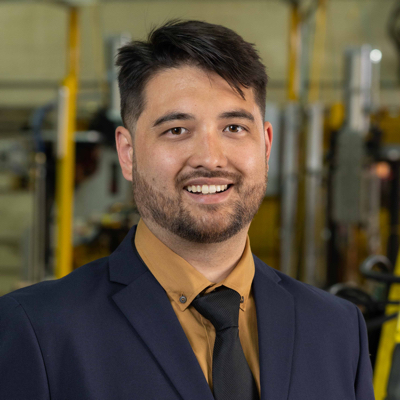
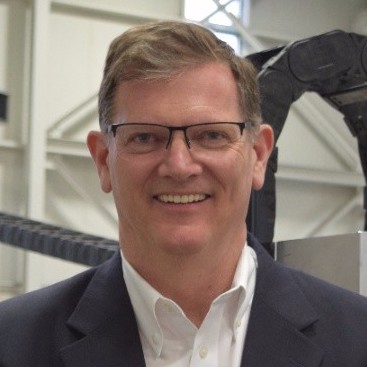
[00:00:23] Speaker B: Hello, everyone, and welcome to the Robot Industry Podcast. And it's my pleasure today to. To welcome back Pickle Robotics, A.J. meyer. A.J. welcome to the podcast.
[00:00:33] Speaker A: Thanks for having me.
[00:00:34] Speaker B: Yeah, no, it's great to catch up. And I'd be very interested because we had you on the podcast very early in your. In your career, but you've been at this for a little while now.
[00:00:45] Speaker A: Yeah, yeah, we've been. We incorporated in 2019. We did our seed round.
[00:00:49] Speaker B: Nice.
And can you remind me in our audience how you got into the industry?
[00:00:55] Speaker A: Let's see. I came up to MIT in 05 specifically to do robotics, and in particular I was interested in the intersection of AI and robotics, which at that time was pretty niche. And I got really lucky that as an undergraduate, a professor named Russ Hedrick took me into his lab as a research undergrad researcher. And the lab was focused on trying to use machine learning to actually train robots to walk and fly, as opposed to just program them. But one of the things that was out of reach in the four years that I worked there was using your hands. So moving around was okay, flying around, walking up and down stairs, but using your hands was a little bit too hard. Spent a little bit of time at Honda Research. I did an internship there working on Asimo. The humanoid?
[00:01:39] Speaker B: Yes.
[00:01:39] Speaker A: That gave me a chance to shift focus from controls, like moving around to perception. And so I worked on the vision system there using synthetic data pipelines and things. And then I started a company after I graduated called LEAF Labs, and we are a consulting company. And we focused on doing those types of projects, like various physical AI and robotics projects for clients like Google and Meta. We built up a nice business and it wasn't venture backed, and we made payroll out of revenue for a decade.
Came to be 2017, 2018, and it was like, you know, using your hands feels solvable now for a robot in a way that wasn't true 10 years before. The question is, what kind of product do you want to bring to market?
And so the genesis of Pickle really was a year inside a LEAF Labs, looking at different tasks in manufacturing and agriculture. And at some point we put eyes on unloading and loading trucks, and man, it was like the middle of the night and it was cold and everybody there, nobody had done that job more than 90 days. The turnover was extreme. And I remember nudging my partners, Dan and Arianna, and said, guys, if we can make a robot do this job, man, you can do anything with a robot. So let's solve it. And that was five years ago. And here we are, we're the leader in robotic truck unloading. And now that we've figured out how to make a robot do that, it's time to make a robot do anything.
[00:02:58] Speaker B: Very exciting. And Pickle Robot's kind of a fun name for you as well.
[00:03:03] Speaker A: Yeah.
[00:03:03] Speaker B: How did that come about?
[00:03:05] Speaker A: Well, it's a robot that picks things up.
It's fun to say, and we love the green and everything, you know, our view was that robotics was going to follow a very similar curve to PCs.
And so, you know, PCs. Even in the 70s, the vision was it would be in all the homes. But the reality was the first major commercial applications were spreadsheets. So it was back office and B2B. So we figured the first really great robotics company was going to be B2B, not consumer. And so that meant that we wanted to build a consumer brand because so many people want to be involved in kind of the robotics revolution that you might not buy one of our robots as an average enthusiast consumer, but you might buy the stock.
So we thought it'd be fun to build a consumer brand, and we did.
[00:03:48] Speaker B: Oh, that's great. So let's go over the math again about parcels and packaging and boxes. Like, you know, you've outlined the problem really well, but what does the math look like?
[00:03:59] Speaker A: Yeah, well, so one of the things we were looking for in picking an ideal task was something really standardized that if you can do it for Walmart, you can do it for Amazon, you can do it for Adidas, you can do it for dhl, et cetera. And so just think, every time you're driving on the highway and you see one of these big tractor trailer trucks, where are those guys going? They're coming from a dock door, the roll up, and they're coming to a dock door, whether that's a manufacturing site or a port or a logistics plant or a retail something. So there's about a million of these dock doors in the world. And so it's a really big task. And there's really only four types. There's doors that bring material in and there's doors that bring material out. There's doors that bring material in, just what we call loose, loaded, such as boxes on the ground. And there's doors that bring it on pallets. And so Pickle's near term goal is to have a product that speaks to every one of those doors.
[00:04:49] Speaker B: Excellent. You know, someone had posted a picture the other day and I can send it to you of a. They snuck in the back of a Home Depot and the truck was being, it was going to be unloaded and I just had never seen anything quite like that before. So I'll send that to you after the recording.
[00:05:06] Speaker A: Yeah. One of the things that surprised me about this, you know, two things surprised me about getting into logistics. And if you had told my teenage self that he ran a robot company, I would say, of course, if you told me that robot company was focused on loading trucks, I would have scratched my head. But, you know, about 10% of the people that I interact with, even some of my executives, unloaded trucks at some point in their career. It's a very common job. And the other thing that surprised me was just how much the inside of some of these logistics plants look like a computer processor. So, you know, I went to mit, I spent a lot of time designing processors and thinking about different types of computers and like, man, the inside of these buildings. It's, it's conveyor belts, which look to me like buffers and there's queues and latencies and throughputs. It's, it's, it's a really interesting mapping.
[00:05:51] Speaker B: Let's talk about dock doors, which a lot of us don't get to get, get to see very often except through pictures or video or whatever. Like it's a problem.
[00:06:00] Speaker A: Right.
[00:06:00] Speaker B: They're like not organized for automation, but you kind of tackle that.
[00:06:03] Speaker A: Yeah. So I mean, the trucks are designed to go over the road and efficiently stuff material in, in the.
What that means is that of all the jobs in the warehouse, loading and unloading the trucks is the least ergonomic because it's really not designed for a person to be able to deal with the material. It's designed to just stuff the truck with as much material as you can for the drive. So it's a very difficult job and it has a very high turnover and it's often also a bottleneck. So, you know, the perimeter of the building, moving stuff in and out is kind of the inputs and outputs of the building. And so if you can get better performance on that, you can often improve the entire performance of the building. The other neat thing about loading and unloading is that for some of the enterprise customers who are, who are highly automated in some buildings. And automation is less common than you think.
[00:06:50] Speaker B: Right.
[00:06:51] Speaker A: You know, familiar with a customer that has over a thousand buildings in the United States and only maybe 150 are automated. But anyway, if you have automated the rest of the building, you still haven't automated load and unload.
That's kind of the last man standing for some of these processes. And so if you solve it and we have it kind of unlocks end to end dark factories in a certain sense.
So we're excited about that too.
[00:07:17] Speaker B: So can you describe your robot arm and kind of how it's been updated and changed since we chatted last?
[00:07:23] Speaker A: Sure. So Pickle spends the vast majority of its R and D dollars on physical AI software. It turns out that unloading a truck from an intelligence perspective is extremely difficult. It's a lot like self driving cars. There are infinite edge cases and numbers of ways to have this go wrong. And you know, it's so incredible how smart people are when they use their hands and do things that we just take for granted that picking up a box and putting it down, it looks easy. But man boxes can be heavy, they can be squishy, it can be bags, it can be car tires, they can be wet, there can be weird lighting. So you know, you really need to make the robot extremely intelligent in order to do this job at all. And so that's where we spend most of our time. If I could have bought a robot that was like ready to go for the truck and all I had to do was program, I would have. And I actually called a few vendors to try and get them to sell me one in the early days, but it didn't exist. So we ended up taking off the shelf parts from the automotive industry.
The robot arm itself comes from a company called Kuka. There's about 12 cameras on the current system. There's pneumatics, there's a big blower fan, the same type of things that you use to pump up a tennis court in the winter. You know, those big bubble tennis courts. And we, and we put all of that onto a single vehicle that has wheels and it drives around. So it's basically a robot arm on wheels. But all the parts came from like really hardened automation technology from automotive.
[00:08:45] Speaker B: And so what happens next after. So I've, I've, I'm the robot. I've picked up this box, I put it, do I put it on a conveyor belt? Does it get scanned and it's being photographed or videoed as, as it's unloading. But then what happens?
[00:08:59] Speaker A: Sure. So you can see this on our website a little bit. The robot has a small section of conveyor on it. And so the robot's job is to convey the freight either from the, from the pile to the conveyor, or if you're loading a truck, it goes the other way.
But ultimately, putting it on a conveyor is what that robot does. Now, behind the robot, we talk about the back of the robot problem. There's a number of different types of processes, but the two most common are manual downstacking, which means that there's a team of people that are going to be keeping up with all the freight coming out of the truck, and they're going to stack it on pallets, and then a forklift is going to take the pallets and move them somewhere else in the building. Sometimes that's to storage, sometimes that's to another truck that's standing by to be loaded and drive away.
Another type of building is fully automated. So we put the boxes on our conveyor belt, that conveyor belt moves them to another conveyor belt, and off they go into some 50 or $100 million piece of equipment that does the rest of the process.
[00:09:56] Speaker B: Very cool. And I'm excited to chat with you about this more. But who's using the robot? Like, what type of facility and where do you. I guess, where do you place the robot? Because it's on wheels, it just can go anywhere.
[00:10:11] Speaker A: Yeah.
So there's kind of three types of buildings where you see these roll up dock doors. There's manufacturing sites, there's logistics plants, and then there's retail sites. And today we're focused entirely on logistics.
But, you know, pretty soon we'd like to expand out to those other other types of facilities. And in logistics, we kind of think of the supply chain as having three stages, at least in the United States, where we import most of our consumer goods. The first is import freight. So that's like a boat full of containers, and they arrive at a port, and then the port moves the container over to the first building on the stop. So we call those import buildings. They're often cross docks. The next stop is going to be distribution. So these are your fulfillment centers or your distribution centers.
And you can imagine that the problem is harder in distribution than an import because a container that just got off the boat might have 2,000 box fans in it or drills or something.
And so, like, one of our examples of a customer that we, that we handle import freight for is like Houston Logistics, big $20 billion logistics company, and they import tons and tons of freight. The next stop is distribution. And it's harder because you're Mixing up all the different freight from importance. So now when you see a distribution trailer, which might be like an Amazon trailer, all the boxes are different weights, they're different sizes. They don't stack very well because you're mixing up everything. And then finally, at the end of the line, you get the hardest type of freight, which we call parcel freight. So that's mixing up all of the distribution freight and putting it in kind of boxes to ship to your house or to the retail site.
And that's really messy. You can see all kinds of things in those trucks.
[00:11:48] Speaker B: What's happening with packaging sizes? Anything like, do you see any trends? Do you see them getting bigger, smaller, longer, heavier, lighter?
[00:11:56] Speaker A: Yeah. I would say the most experimentation that we see from our customers in package sizes is about consolidation, different ways to take small packages and put them in larger ones so that you can handle it less. And so, for example, if you have a huge network, if you're Amazon or UPS or something, it makes a lot of Sense to take 12 or 15 packages and put them in some kind of bag or a tote, and then you just carry that tote all the way to its end destination through four or five buildings, and then you decant it kind of at the end.
So there's all kinds of experimentation and consolidation, from plastic totes to different types of bags, all sorts of things.
[00:12:36] Speaker B: I have kind of a question with you about. About error correction on your. On your system, because you must have a lot of different operators, right? A lot. A lot of different languages, a lot of different cultures who are operating the robot.
[00:12:48] Speaker A: Yeah. So, I mean, the robot itself is designed for one person. Either if it's a downstacking configuration where you might have three or four people stacking boxes, that any one of those people is kind of sharing the burden of supervising the robot. And you might spend anywhere between 5 and 12 minutes an hour helping the robot in some way, either pushing buttons on a screen or going in the truck and moving across car tire out of the way or whatever it is.
And the robot learns from those interactions. We call them demonstrations. So one of the cool things in physical AI is that it's no longer the case that an intervention is a bad thing. The intervention is how you help train the robot. So if a human kind of shows the robot how to push a tire out of the way 50 times in the future, it won't need help with that type of edge case anymore. So we think it's really important to have these people working closely with the robot as supervisors, because they're the ones that help keep things moving smoothly and handling all these edge cases, which is what humans are really best at. In another type of scenario in like a fully automated building, you might have 100 doors with it's just all slammed all the time. Every one of them has a truck on it and they're all just flowing freight through. And so the way we set that up is that there's one person supervising five or six robots today.
We'd like to get that up to 10 robots and then you kind of have a diminishing return.
[00:14:11] Speaker B: So I'm kind of wondering, I'm very excited for your, for your business and for your all these opportunities. How does the sales cycle go for you? Do you.
You must have so many opportunities or so many areas that you could go after. It must be almost.
No, we have to stick with this one.
[00:14:29] Speaker A: Yeah. So you can imagine I don't know what the number is today, but it's pushing. 2000 brands internationally have reached out to us to try and get robots. W yeah, it's a very common task. And Pickle is now the market leader in trailer unloading. And actually this particular task of automating unload is the most popular.
I think the Material Handling Institute did a survey last year that said 40% of operators were hoping to buy some kind of solution.
I think the demand is pretty far ahead of supply at this point. Now, of 2000 brands, there's two segments that really have completely different answers to your question. The first is kind of the mid market segment. So think somebody that might have a need for between 5 and 25 robots. That can be a very fast sales cycle. The fastest sale I ever closed was four weeks from brand awareness to signed contract. And we didn't have any inventory at the time, but if we had, we could have shipped it the very same week and been delivering value to that customer in five weeks from awareness. So that's pretty much unheard of in automation. But in robotics I think it's going to be the norm because what we make is a product that does a thing that you already have. So it's very easy to just drop it in.
Now the other segment that we serve is the super enterprise segment and there's maybe a couple dozen of these companies around the world and that can be a longer sales cycle. So you're going to pilot, you're going to spend six months on the pilot and then you'll solely scale up.
That's a longer road. But the upshot is you can generate tremendous revenue for yourself and Deliver a lot of value to the customer just because of the scale of their problem. I mean we've talked to customers that have thousands of doors that need automation.
[00:16:09] Speaker B: What is the ROI on a pickle robot system?
[00:16:12] Speaker A: So I think about ROI in robotics as following a similar curve to like enterprise software. In the 1980s once upon a time it was measured in years. You know the minimum purchase quantity was going to be a seven figure contract and, and over a couple of decades we ended up with software as a service where you wouldn't even ask that question anymore. You just try it and you get value immediately. So that's what's going to happen with robotics too. And when we started talking to customers a few years ago, it was not atypical to hear about four or five year payback periods on automation projects. That's come way down. Even the largest enterprise customers are really looking for a sub three year, sometimes two and a half year payback period.
Smaller mid market customers are really looking for 18 months or a year. So you really need to be able to deliver that.
But I strongly believe that this stuff is going to get cheaper and easier to deploy every year for as long as my career radar goes for the next 20 years. So we have some customers that are doing RAAS robots as a service and they rent them and they get that kind of 12 to 18 month payback period. And we have some customers doing capex where they buy a robot from us for about $300,000 and it pays back in two and a half, three years.
[00:17:23] Speaker B: If I just, if I, for my distribution center that I own, let's say, how long would it take for if I bought a robot from you? Do you have to come down for a week or whatever and just make sure all my guys are trained and, and such? Is that how exactly?
[00:17:37] Speaker A: So, so if you called us we would probably qualify you on the phone by asking some questions about your freight. We'd probably want some pictures of your freight and that's kind of the first step in qualifications. Just show me what the trucks look like and then tell me your production rates. How many boxes per hour do you need to get out of the truck? How many doors are you looking to automate? Where are they in the building. But it's basically a phone interview and we can qualify you there.
We're really interested in volume. So if you get more than two trucks a day of what we call eligible freight, then you're going to see a nice ROI story. So if that looks good, then we'll probably do a site Visit, although we're trying to stop doing that just to, to quicken the sales cycle and we'll figure out where to drop power and that sort of thing.
And then you're good to make an order if you're fully qualified after that.
To deploy a robot takes about a week, so it arrives on a Monday and then it's usually installed and picking by Wednesday. And then we spend the back half of the week training and then we try and go home.
Yeah, Exactly.
And in 2025, kind of the back half of 2025 is the first time we've started handing off robots all the way. And Pickle goes home and you know, leaves it with the customer and they run, you know, in some cases three shifts in the middle of the night. And we support it from our operations center.
[00:18:53] Speaker B: So you're using a lot of AI, you're using for yourself and for your product. But I'm kind of wondering as a customer, how does the AI work for me? Like, am I, is there some stuff that I can get out of.
[00:19:05] Speaker A: Data.
[00:19:05] Speaker B: Out of the data?
[00:19:06] Speaker A: It's a great question.
You know, right now we've been focused on the core product of just matching your specification in terms of production rates and uptime and damage and all these different things, things that customers care about and just delivering a super high quality product that does the job.
Now that said, the very next thing is to start to think about how customers can use the data.
I think there's a lot less value in just dumping all the logs. I mean, a robot generates 100 gigabytes a day of vision data and other types of. We measure all the weights and the sizes and we know about the material and we know which boxes worked and we see labels. So all that stuff we have.
But the most valuable data in my view is to see how it fits into the rest of the process.
And so if you can start to imagine building a digital twin of your, of your environment, you can start to recognize that there's trade offs between pieces of equipment. So for example, if the robot is going too fast and the belt is all backed up, but we're dropping maybe 3% of the packages and maybe denting a corner every once in a while, slow down, stop dropping packages and make that trade off. Or if it's the other way around, maybe customers say, oh, I don't care if you're dropping packages, it's all designed for that. And the boxes have plenty of wear in them, but you should speed up. So you need to know what's going on Downstream to make that trade off.
Another good example of what I consider valuable data we've seen now a few customers integrate us with other products downstream company that we're close to that I like a lot is Ambistack.
And so Ambi Robotics makes a palletizer. And so customers are like, man, this is the easiest thing in the world to integrate. I literally just pushed the conveyor belts together and you feed the boxes from the pickle to the Ambi and pretty soon I have completed pallets. So I think that's great. But the Ambi stack is weighing the packages and measuring them. I'm weighing the packages and measuring them. I can just tell Ambi and save them a couple seconds on the cycle.
[00:21:09] Speaker B: Sure.
[00:21:09] Speaker A: So what you're going to start seeing over the next few years is robots that talk to each other and share this data and, and overall perform way, way better because they're optimizing at the process level rather than the job level. We call that orchestration.
[00:21:22] Speaker B: Nice. You know what I was kind of thinking on another path about? I would be able to tell one of my suppliers that they're boxing or their packaging or their labeling really is terrible and they owe us a discount because it's a higher cost of pick. But I do think those are really, really good examples. Thank you for that.
What do you think of humanoid robots? You kind of had this little chat about the early on because you of course would be right on this.
[00:21:48] Speaker A: Right, sure. Well, look, I think humanoids have an important role to play in the emerging ecosystem. I think they're still a little ways out from, from commercialization, but they're coming for sure.
You know, I think the difference between a humanoid and a product like ours is the difference between something that's tailor made to do a specific job versus something that's general purpose to do to do a lot of different jobs. There's a real trade off there. So if you have, you know, a bunch of little jobs that you're switching between every 20 minutes or something, it's easy to imagine that you want that generality that comes from a humanoid. Meanwhile, if you have a job that's just constantly going for 2,000 hours a year, 4,000 hours a year, you know, you don't want to pay the penalty that comes with generalization.
And so right now the penalty is, number one, you've got equipment you might not need, like, do I need 10 fingers or is suction cups going to do? Do I need two arms or is one going to do? Do I need two legs? Or are wheels. Okay, so for every time you think about doing one of these jobs, I think for the human like category that we're all a part of, you definitively need mobility, you definitively need dexterity, and you definitively need autonomy, some kind of physical AI, but you don't necessarily need like a human form factor for every single job. In fact, you can have much better ROI if you don't.
Higher performance and things.
Now that said, one of the things I don't think we were thinking about when we chose Unload, but we're now quite happy with, is the likelihood of a humanoid outperforming us in a truck is 0%.
They're just not strong enough, they're not fast enough.
And for us, our approach to this market is to make robots that move really, really fast. And I think humanoids, as far as like dexterous type tasks are concerned, haven't quite demonstrated any kind of speed or, or strength yet.
[00:23:39] Speaker B: Thank you for that. Aj You've got some other products too, right? What are they for our listeners?
[00:23:45] Speaker A: No. So Pickle Robot, you know, right now we're just in market unloading trailers.
Soon enough we're going to be in market loading trailers as well. And now that we've kind of proven with enough customers that we can kind of deliver a solution that works in this kind of human like category, we're excited to platformize the Autonomy stack that we've built. We call it the DIL Autonomy engine, and focus it on just a couple more form factors that we think are useful, useful in the logistics environment.
So that's unloading, that's loading. Very easy to imagine the utility of having a bimanual platform on wheels where you can start stacking packages and packing orders. And then I think humanoids are a useful platform too. So when we think about Dae, which is more of a 2027 sort of offering for us that we're working really hard on, we're thinking about partnering with just a few different hardware manufacturers so that our product line will be a mix of first party hardware like our unload robot, and third party hardware like a pallet mover or humanoid.
[00:24:44] Speaker B: Yes, you can imagine there's some need to integrate all these things for say a shipper or receiver who says, I don't know anything about this stuff, you guys need to take care of it front to back.
[00:24:55] Speaker A: That's right. And I think Pickle is really the leader in a position to do something about that idea because, you know, a lot of the advancements in physical AI recently have been Task agnostic. You know, they're trying to kind of wait for a humanoid level autonomy stack that's good enough to do anything before it can do even one thing.
So Pickle took the opposite view that we said, let's stick the landing on one thing and then do a second thing and then do a third thing. And when you focus on a particular task, what you realize is you can learn much more efficiently because, you know, the KPIs, the customer cares about throughputs and uptime and drop rates and variants and all these things. And so what we're asking from our physical AI stack and our machine learning is to learn to push those numbers up that really drive value. So I think the task focus is really important. And when I think about dae, I don't think about a general purpose platform to do everything. I think about a platform that needs to do four or five more things to unlock dark, dark factories in, at least in the logistics sector.
[00:26:00] Speaker B: Thank you for that. And I've heard that, that you've just hired a whole bunch of engineers. Can you tell us about that?
[00:26:06] Speaker A: Yeah, we're growing like crazy. I think we're probably 140 people these days engineer about half of the company, and it's been great. I think that what where we do our best in recruiting is getting engineers who have been excited for a long time to kind of work at the bleeding edge of physical AI and robotics, particularly this human like category of robotics. But they don't want to work at a research lab where they don't know what the product is and they don't know who the customers are. They want to be in the field and in the trenches. And so when, you know, people who are excited to actually serve customers end up joining Pickle and, you know, there's plenty of other people that would rather not and they prefer the lab environment and there's a lot of opportunity.
So no better time than 2025 to get a job at a robot company.
[00:26:54] Speaker B: Absolutely. I totally agree. Hey, thank you very much for coming on today. It's been awesome catching up and I'm just kind of wondering if. Did we forget to talk about anything today?
[00:27:03] Speaker A: No, I think we covered all the bases.
Yeah. Thanks for having me.
[00:27:09] Speaker B: AJ if somebody wants to find out more about Pickle robots or maybe yourself, what's the best way for them to get in touch with you?
[00:27:16] Speaker A: Sure. Well, they can always hit our website and email
[email protected] and Google US to learn more.
[00:27:23] Speaker B: And thanks for listening. You might know that I run a marketing consultancy called Customer Attraction where we focus on marketing, branding strategy and content creation. We do a lot of project work and help you with your marketing challenges and we're focused on automation integration and robotics. We welcome new customers and projects and can help you get your marketing back on track, Fix your website or perform something simple like a marketing audit. I'd like to acknowledge A three the association for Advancing Automation. They're the leading automation trade association for robotics, vision and imaging, motion control and motors and the industrial artificial intelligence technologies. Visit automate.org to learn more. And if you'd like to get in touch with us at the Robot Industry Podcast, you could find me Jim Beretta on LinkedIn. Today's podcast was produced by Customer Attraction Industrial Marketing and I'd like to thank my team Chris Gray for the music, Jeffrey Bremner for audio production, my business partner Janet and our continuing sponsored Mecademic Industrial Robots.